AI detection engineering

Know which detections work, where to improve them, and how they map to MITRE ATT&CK.

Most teams can’t say which of their detections are worth keeping. Embed can, using evidence from the investigations it already runs. Nothing new to set up.

circles background

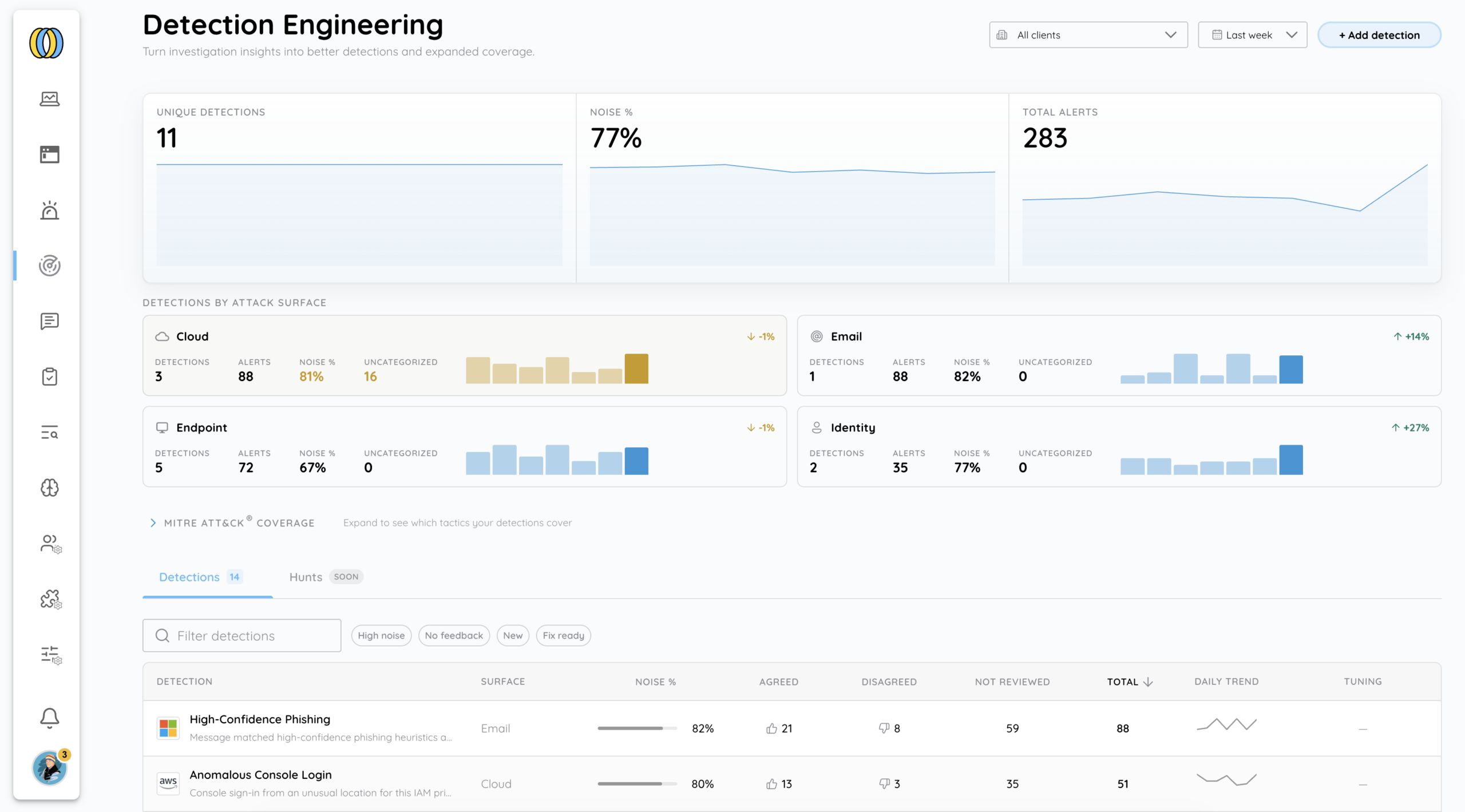
Detection effectiveness is how often a detection catches a real threat instead of creating noise. Embed shows it for every detection you run.

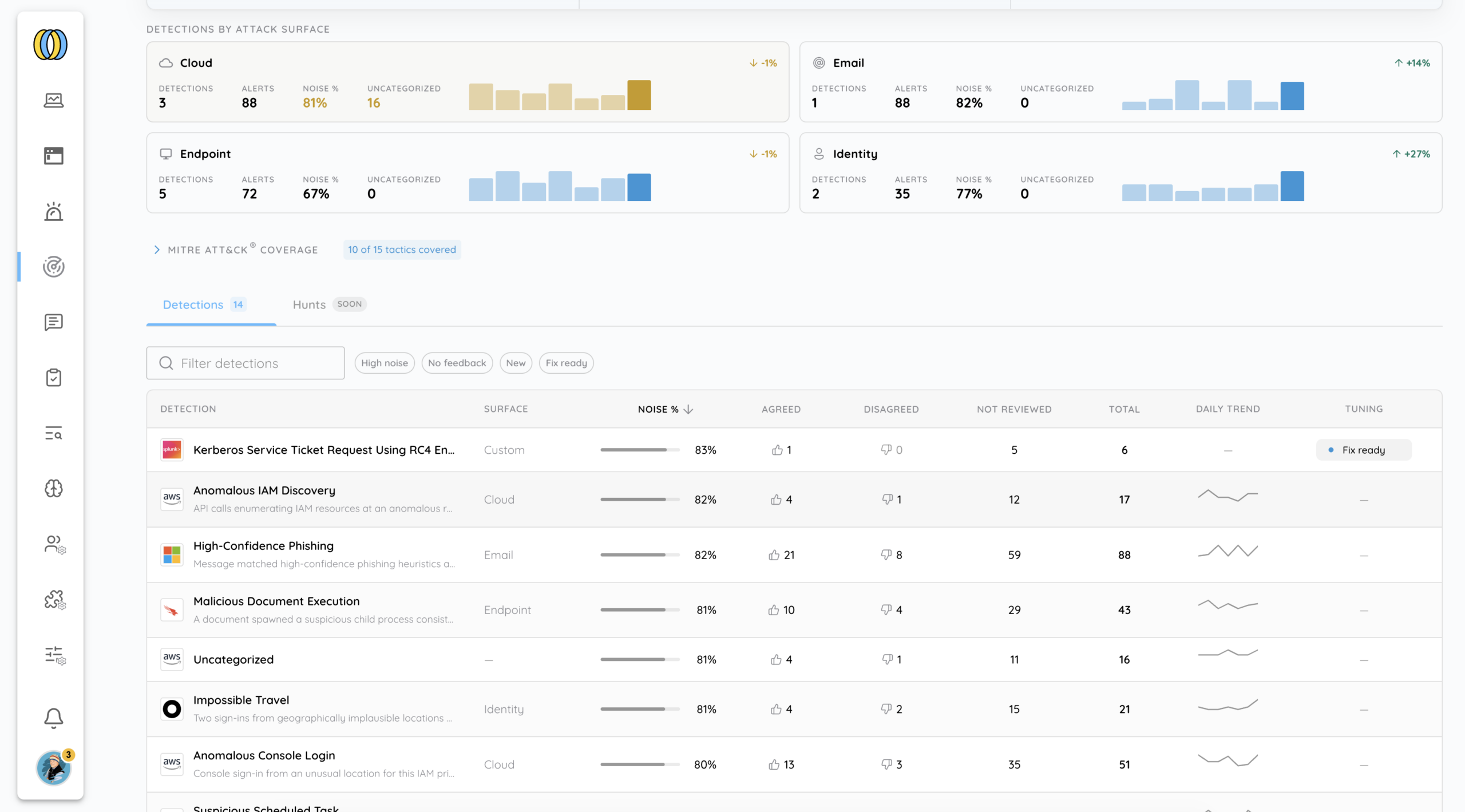
Sort the dashboard by noise. Your top detection fired 60 times this quarter, and 81% of those alerts were noise. Click in to see every case behind the number. The same view works by tool, so you can compare your two EDRs, or AWS and Azure, side by side.

improve detection quality

Improving detection quality means tuning the detections you have and building new ones, based on evidence from real investigations. Knowing a detection is noisy is half the job. The other half is fixing it, with the cases to back it up.

  • Tune the detections you wrote. Embed looks across triaged cases to find why a detection is commonly noisy, then recommends a specific fix in valid syntax for supported SIEMs.
  • Build new ones. Embed can also propose new detections, grounded in what your investigations turned up.
  • Decide on the ones you didn’t write. You can’t edit a vendor’s built-in detections. You can see whether they earn their keep, and turn off the ones that don’t.

Your team reviews every suggestion and applies it in your own tools. Every recommendation traces back to the investigations behind it.

understand detection coverage with MITRE ATT&CK

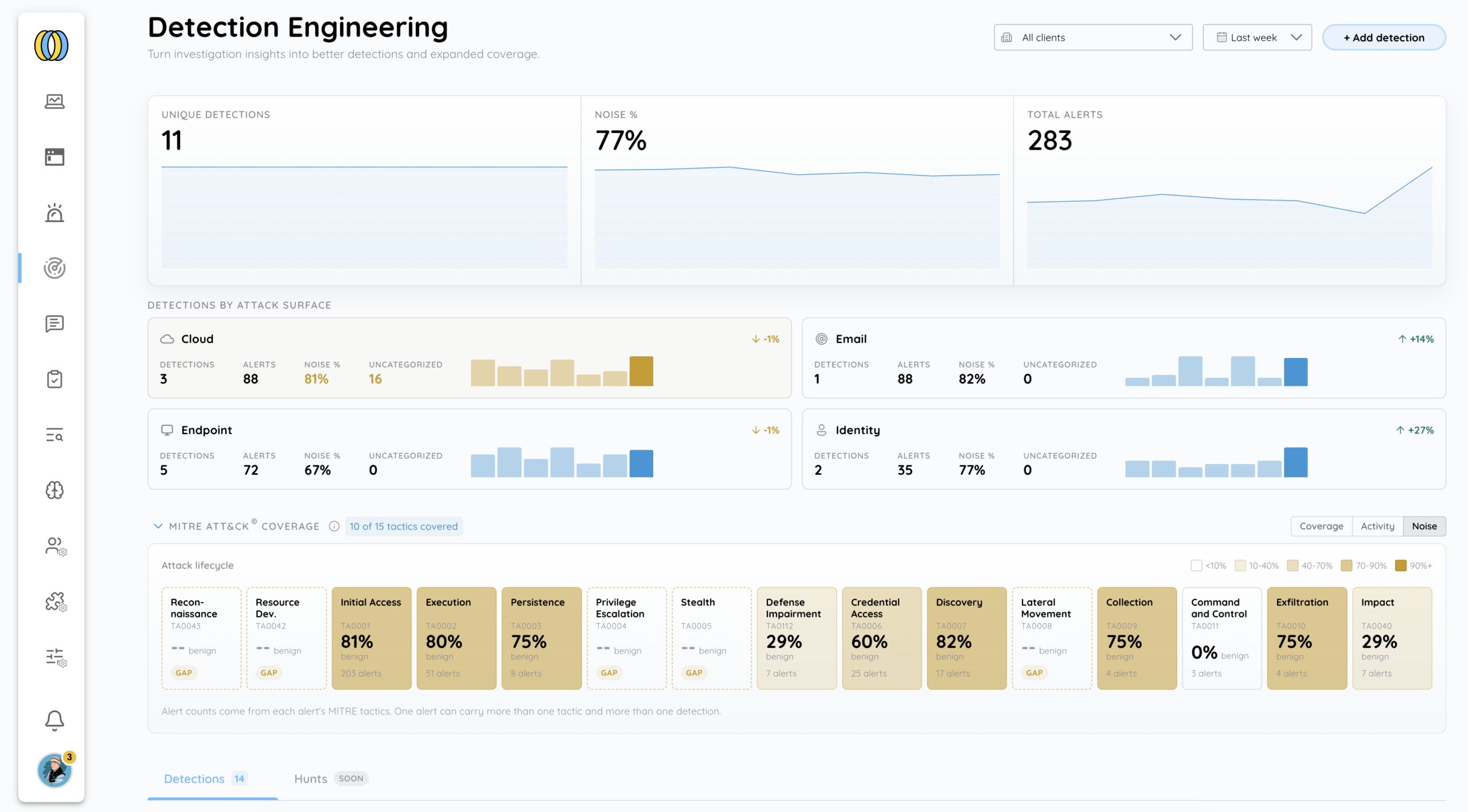
Detection coverage shows which techniques in the MITRE ATT&CK framework your detections map to, and which have nothing mapped yet. Embed builds that map from the detections it sees.

Coverage maps tend to look better than reality. 

A filled-in technique means a detection exists. It doesn’t mean the detection works.

Embed’s map is different. The detections on it are the same ones Embed investigates every day, so each one comes with a track record. You see what’s mapped and how well it performs.

That’s an inventory, not a verdict. The map gives you a clear place to start: where to test, where to build, and where to point your threat hunts.
how embed tracks detection performance

To know if a detection is any good, you need to know what happened every time it fired. Was the alert real, or was it noise? Most teams never track that. Analysts close the alert and move on.

Embed tracks it for you. Every alert Embed investigates ends with a verdict, and each verdict is tied to the detection that fired it. Over time, that becomes a track record for every detection. No tagging, no new tool, no extra work for your analysts.
Embed isn’t a detection engine. It doesn’t hold, own, or deploy your detections. It shows you how they perform.

Embed connects by API to the SIEM, EDR, identity, and cloud tools you already use. No rip-and-replace. See leading integrations


what sets embed’s detection engineering apart

  • Coverage and effectiveness, together. Most coverage maps stop at “a detection exists.” Embed shows how each mapped detection actually performs, so you can tell real coverage from coverage on paper.
  • Reasoning you can check. Every verdict behind every number shows its work. If you question a recommendation, you can see exactly which cases it came from.
  • Every tool, not just the SIEM. Embed shows how detections perform across your SIEM, EDR, email, identity, and cloud tools, including vendor detections you can’t edit.
  • Straight answers about coverage. Embed won’t tell you you’re fully covered. It shows what’s mapped, how it performs, and where to look harder.
  • Your detections, your call. Embed recommends. Your team decides what changes. Nothing ships to production without you.

why it matters for CISOs and detection engineers

For CISOs: Detection effectiveness becomes a number you can report. You see which tools earn their spend, and you can show leadership how your detections line up against MITRE ATT&CK, with performance data behind every mapped detection.

For analysts and detection engineers: Fewer repeat false positives in your queue. Proof, case by case, to fix or kill the detection everyone already complains about. And a clear view of where to test or build next.

why faster triage doesn’t fix your detections

Plenty of AI SOC tools cut alert volume. The noisy detection is still noisy. It just gets closed faster. And nobody gets a clearer picture of what the detections actually cover.

  • Detections come from everywhere. Your SIEM, EDR, email, identity, and cloud tools all fire alerts, each with its own logic and console. Nobody has one view of which tools and detections are pulling their weight.
  • Tuning is reactive. A rule gets loud, so it gets disabled. Nobody writes down why.
  • What analysts learn stays in closed tickets. The reason an alert was benign is in someone’s notes, not in the detection.
  • Coverage is a spreadsheet exercise. Mapping detections to MITRE ATT&CK by hand is slow, so the map rarely stays current.

signs you need AI detection engineering

  • You disable rules instead of fixing them.
  • Your threat hunters spend their time covering Tier 1 and Tier 2 gaps.
  • Your AI SOC tool reduced alert volume but didn’t improve detection.
  • You can’t say which MITRE ATT&CK techniques your detections map to.

detection engineering FAQ

What is AI detection engineering?

AI detection engineering uses investigation results to measure and improve the detections that generate alerts. Embed investigates the alerts your tools send across endpoint, cloud, email, and identity, ties every verdict back to the detection that fired, and uses that record to show which detections work, where to improve them, and how they map to MITRE ATT&CK.

How do you measure detection effectiveness?

Look at what happened every time a detection fired: was the alert a real threat or noise? Embed tracks that automatically. Every alert it investigates ends in a verdict tied to the detection that fired, so each detection builds a track record you can sort, compare, and report on.

How can investigation data improve detection engineering?

Investigations show what a detection actually caught. When every alert you send to Embed is investigated, you can see which detections lead to real findings and which ones create noise. Embed ties each outcome back to the detection that fired, so tuning starts from evidence instead of guesswork. The same data shows which tools are noisiest, so you know where to focus.

Can an AI SOC platform help with detection engineering, or only triage?

It can do both, but many stop at triage. Embed investigates the alerts you send it, then uses those outcomes to rank detections by noise and recommend specific fixes. Triage gets faster, and the detections behind it get better.

How is this different from disabling or suppressing noisy rules?

Disabling a rule removes the noise and the coverage. Suppression hides alerts without fixing the logic. Embed shows why a detection is noisy, like a trusted tool or an expected admin task, and recommends a targeted change. The reasoning is documented, so the next engineer knows what changed and why.

Does Embed change detection rules automatically?

No. Embed isn’t a detection engine. It doesn’t hold, own, or deploy your detections. It recommends changes in valid syntax for supported SIEM platforms, and your team reviews and applies them in your own tools.

Does Embed map detections to MITRE ATT&CK?

Yes. Embed maps the detections it sees to MITRE ATT&CK techniques, so you can see which adversary behaviors your detections line up with and which have nothing mapped. Each mapped detection comes with its investigation track record, so you can see how it performs.

Does mapping detections to MITRE ATT&CK prove coverage?

No. A map is an inventory, not a verdict. A mapped technique still needs testing to prove you’d catch the attack, and an unmapped one isn’t necessarily undetectable. What a map does show is where to look harder. Embed adds how each mapped detection performs, so you can tell real coverage from coverage on paper.

How is Embed different from other AI detection engineering tools?

Embed pairs coverage with effectiveness. Every detection on the MITRE ATT&CK map comes with an investigation track record, so you can tell real coverage from coverage on paper. Embed shows the reasoning behind every verdict, covers detections from every tool it investigates, and leaves every change in your team’s hands.

Which tools does Embed’s detection engineering cover?

Embed shows noise for detections from every tool it investigates alerts from: SIEM, EDR, email security, identity, and cloud. Fix suggestions are for detections you can edit, usually custom rules in a supported SIEM. For vendor detections you can’t change, Embed shows how they perform so you can decide whether to keep them on.

How does Embed work alongside detections we’ve built in-house?

Embed investigates alerts from the detections you already run. Its recommendations target the detections your team wrote. You keep your rules, your tools, and your process.