
Everything Security Leaders Need to Know About AI SOC

Security teams are overwhelmed by alert volume, false positives, and repetitive triage work. AI SOC helps reduce that noise by automating alert investigation, enriching context, and helping analysts focus on what matters most.

This FAQ answers common questions about AI SOC, agentic investigation, trust, transparency, and how Embed works.

Every. Alert. Investigated.

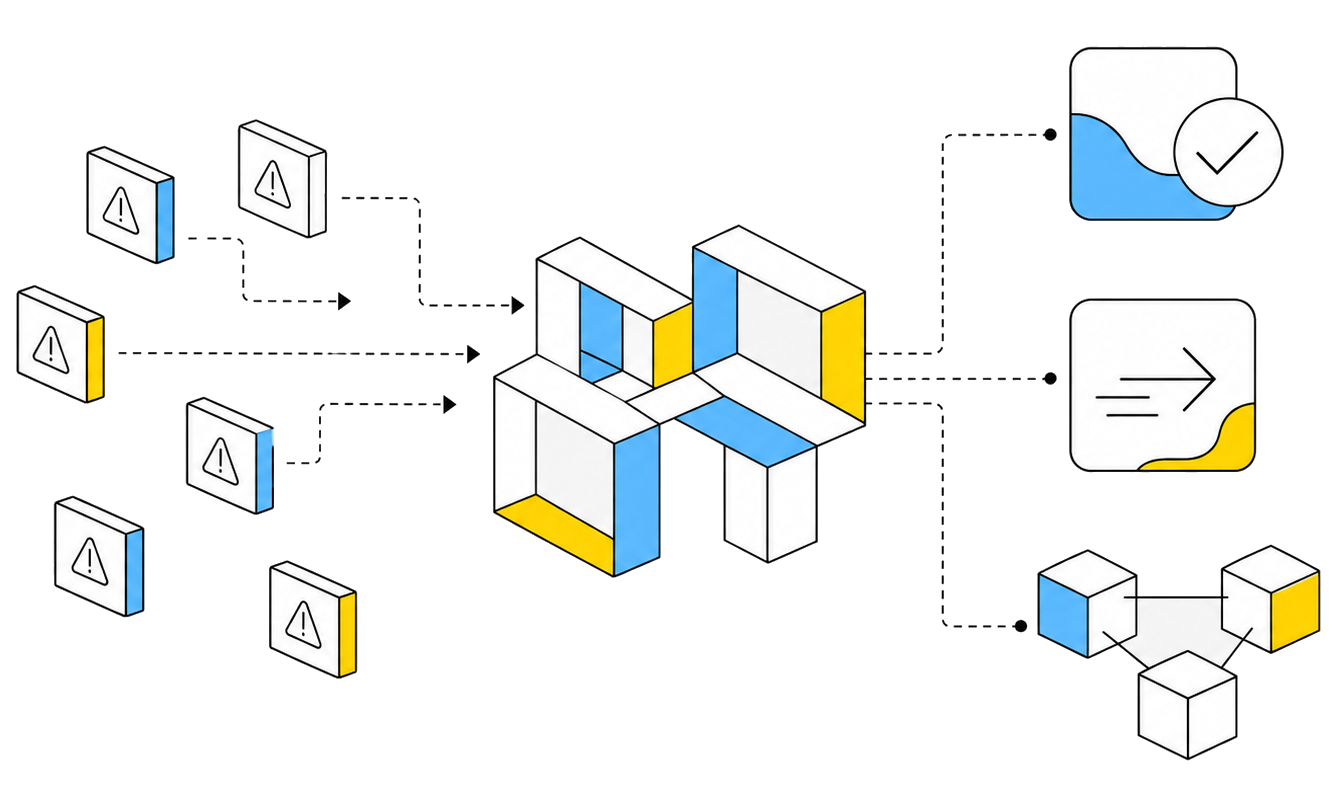
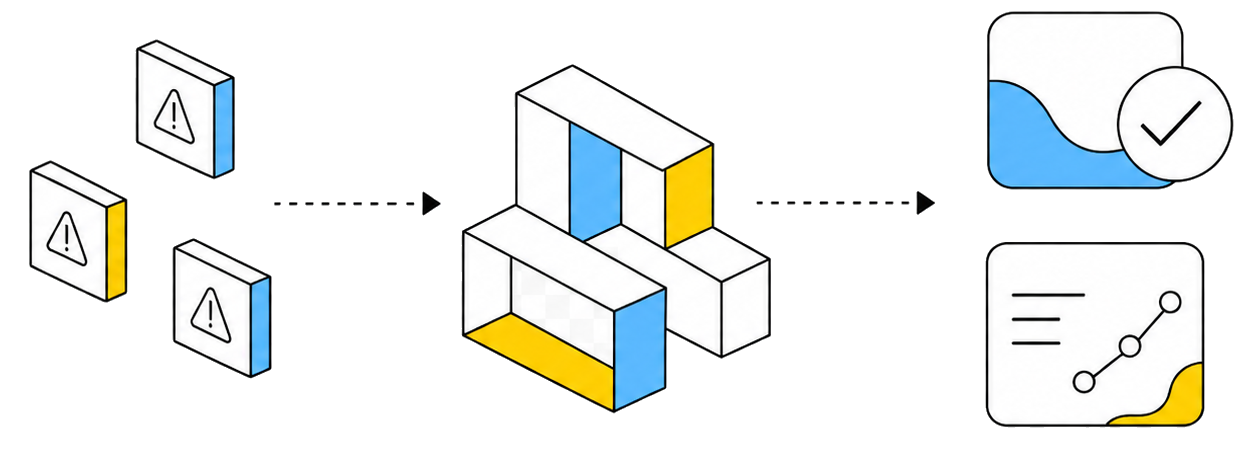
group of white, blue and yellow 2D drawn rectangles

the embed agentic security platform

  • Investigates 100% of alerts
  • Reduces investigation time by up to 90%
  • Integrates with your existing security stack — no rip and replace

Understanding AI SOC

What is AI SOC?

AI SOC applies artificial intelligence to scale security operations tasks such as alert triage, enrichment, investigation, detection engineering, threat hunting, and response. Instead of requiring analysts to manually evaluate every alert or perform repetitive security tasks, AI SOC technology gathers context, evaluates evidence, and helps determine what happened, why it matters, and what should happen next.

Embed’s agentic security platform applies analyst-grade reasoning to investigate alerts today while creating the trusted decision layer that strengthens detection engineering, threat hunting, and response across the modern SOC.

What is agentic investigation?

Agentic investigation means AI agents dynamically determine what to investigate next based on the evidence they uncover. Rather than following a fixed playbook, the system adapts step by step — asking follow-up questions, gathering relevant context, and reasoning through the investigation, the same way an experienced analyst would.

What is a security alert?

A security alert is a notification generated by a security tool when it detects activity that may indicate a potential security risk. An alert is a signal that something deserves investigation, not proof that malicious activity has occurred.

Alerts can originate from email security, endpoint detection and response (EDR), cloud platforms, identity systems, SIEMs, and other security technologies. Many alerts ultimately prove to be benign, which is why they require additional context before analysts can determine the appropriate response.

Embed autonomously investigates every alert, helping security teams separate meaningful threats from security noise.

What do I get from Embed?

A clear answer for every alert, along with supporting evidence and recommended next steps. Each investigation includes a classification (benign, malicious, or inconclusive), supporting evidence, a structured summary of findings, investigation reasoning, and suggested next steps.

Does Embed investigate every alert?

Yes. Embed autonomously investigates 100% of alerts — not a sample, not just high-priority events — which helps reduce backlog and keeps meaningful signals from getting buried in noise.

How Embed Works

What does Embed actually do?

Embed autonomously investigates security alerts by gathering context, analyzing multiple data sources, and delivering evidence-backed conclusions. Ingesting alerts and using its proprietary iSteps™, Embed gathers relevant data, evaluates investigative questions, correlates findings, and produces a transparent result analysts can inspect and trust.

What data sources does Embed use?

EDR, email security tools, cloud environments, SIEM platforms, identity systems, threat intelligence, historical data, and organizational context through NoiseIQ™ — correlated together for a complete picture of each alert.

How does Embed integrate with my environment?

Embed connects with existing security tools through APIs. Teams keep their current tools and workflows while adding autonomous investigation on top of their existing stack — no rip and replace.

What are iSteps™?

iSteps are Embed’s intelligent investigation steps that mirror how experienced security analysts investigate alerts. Each iStep gathers evidence, answers a specific investigative question, and contributes to the overall conclusion. Because every step is visible, analysts can understand exactly how Embed reached its decision, creating transparency and trust in every investigation.

What is NoiseIQ™?

NoiseIQ captures your organization’s operational knowledge and applies it during investigations. By learning your environment, users, assets, policies and historical activity, Embed understands what is normal for your organization and what deserves closer attention. The result is investigations that become more accurate, relevant, and aligned with how your security team operates.

Can Embed take action on its own?

Embed autonomously investigates — querying data sources, correlating evidence, reaching conclusions. Organizations remain in control of remediation decisions, while optional integrations with SOAR and response platforms enable automated actions where appropriate and under customer-defined governance.

Does Embed use external threat intelligence?

Yes. Embed uses external threat intelligence sources to enrich investigations — including file reputation, domain intelligence, IP intelligence, URL analysis, and related enrichment sources.

Trust & Transparency

Can I trust AI-generated security investigations?

Accuracy, consistency, and transparency are the foundation of trust. Every Embed investigation is backed by the evidence, reasoning, and investigative steps used to reach its conclusion, allowing analysts to inspect the logic, validate the outcome, and respond with confidence.

How accurate is Embed?

Embed applies a consistent investigation process to every alert, which helps reduce time spent on false positives and supports more reliable outcomes than manual triage, which can vary with analyst workload and experience.

How does Embed prevent hallucinations?

Embed grounds investigations in real evidence and structured logic — step-by-step investigations, evidence-backed conclusions, practitioner-designed workflows, and customer-specific context, rather than open-ended AI guesswork.

Operations & Outcomes

How quickly can Embed be implemented in an environment?

Implementation takes just minutes as Embed is a SaaS based application that connects to your existing security investments via APIs. No playbook creation or lengthy learning times needed. You’ll see results immediately.

How fast and scalable is Embed?

Investigations complete in minutes, operate 24/7, and scale without creating alert backlog — even as alert volume grows.

How does Embed handle false positives?

Embed evaluates alerts using context, historical information, correlated signals, and investigative reasoning — rather than looking at alerts in isolation — to determine what’s actually meaningful versus noise.

How are false negatives mitigated?

Embed is designed to reduce the likelihood of missing real threats, using multiple sources of evidence, customer-specific context, and ongoing feedback. When evidence isn’t strong enough for a clear classification, the result is marked inconclusive for human review.

What happens in edge cases?

If Embed can’t confidently classify an alert as benign or malicious, the investigation is escalated as inconclusive, with full context and reasoning so analysts can review it efficiently.

Why Embed

  • Security Noise Cancellation™ — Embed reduces alert noise so analysts focus on what matters most.
  • Not All AI Is Created Equal — built by security practitioners for demanding SecOps environments.
  • Trust and Transparency — iSteps™ show the step-by-step investigation process behind every conclusion.
— Jonathan Neff, CISO, University of Montana

“Embed consistently surfaces advanced threats with impressive accuracy… Beyond improving triage, Embed deepens our understanding of the full investigation — offering both clarity and context in every case.”